Pressure Washing
Pressure Washing for Piedmont Triad Homes
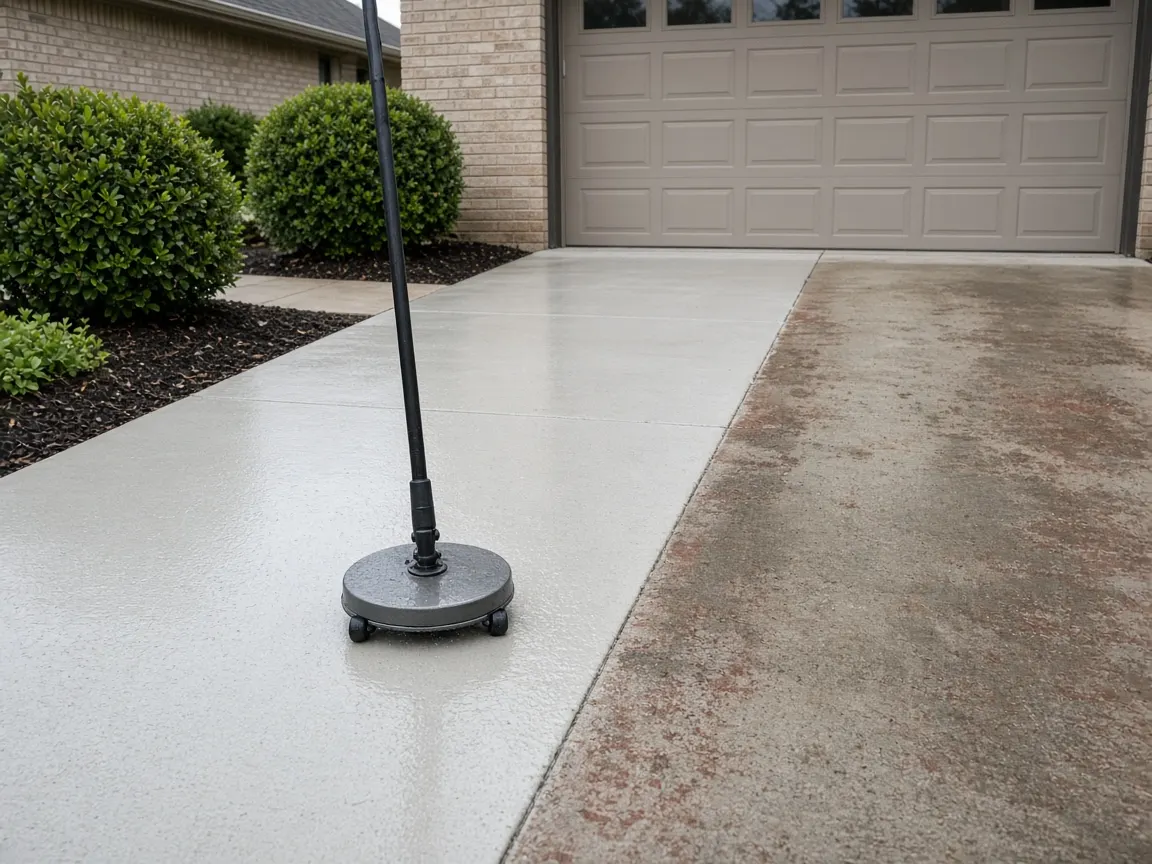
Residential pressure washing uses high water pressure and a rotary surface cleaner to lift dirt, algae, mildew and red clay from hard surfaces such as concrete driveways, sidewalks, patios and pool decks. Softer or painted surfaces — vinyl and painted siding, stucco, roofs and delicate trim — are cleaned with a low-pressure soft wash instead, so the method matches the material. Many visits combine both, then finish with window cleaning so runoff does not spot the glass.
What can be pressure washed at a Triad home?
The surfaces that typically take high-pressure washing are concrete driveways, walkways, patios, pool decks, steps and many retaining walls. Brick and stone can often be cleaned, usually at a moderated pressure so older mortar is not eroded. Wood decks and fences are cleaned at low pressure with a wood-safe cleaner, not with the same force used on concrete. Vinyl or painted siding is soft washed. A quote should list each surface and the method planned for it.
When is high-pressure washing the right method?
High pressure belongs on durable, hard surfaces — especially concrete — where dirt, algae and clay staining are bound to the material and a rotary surface cleaner can produce an even, stripe-free result. It is the wrong tool for vinyl, painted wood, stucco, window glass and frames, and most roofs, because the force can drive water behind panels, strip paint, crack trim, break window seals or damage shingles. A careful crew chooses pressure by the surface, not by the machine they brought.
When is a low-pressure soft wash the better choice?
Soft washing uses roughly garden-hose-level pressure plus a cleaning solution that breaks down algae, mildew and grime, then a gentle rinse. It is the standard method for vinyl, painted and fiber-cement siding, stucco, painted trim and many roofs. The solution does the work instead of the force, which is why soft washing is safer on those materials than a high-pressure wand.
Can pressure washing remove red clay, algae and dark stains?
Piedmont red clay splash and green or black algae are the two stains Triad homeowners ask about most on concrete. Much of the clay film and organic growth lifts with a surface cleaner and the right pre- or post-treatment. Rust, oil, fertilizer burns and long-set clay stains often need a specific treatment and may only lighten. The provider should point out stains that are unlikely to come out fully before work starts.
How does pressure washing fit with house washing and window cleaning?
They are often booked as one visit. Concrete and other hard surfaces are pressure washed, siding is soft washed, and windows are detailed last so wash runoff does not spot the glass. One appointment, one crew and one quote covers the property instead of coordinating separate companies.
Which towns can book this service?
Greensboro, Winston-Salem, High Point, Kernersville, Summerfield, Oak Ridge, Clemmons, Lewisville, Jamestown, Archdale, Thomasville, Walkertown, Stokesdale. See town notes.
Other questions
How often should a driveway or patio be pressure washed in the Triad?
Many homeowners pressure wash concrete once a year, or every other year, and before a gathering or a home sale. Shady, damp slabs that grow algae, and drives that collect red clay wash-off, may need it more often.
Is pressure washing safe for plants, pets and landscaping?
The main risks are high-pressure overspray, runoff from cleaning solutions, and blasting soil or mulch. Reputable crews keep the wand and surface cleaner on the hard surface, pre-wet and rinse nearby plants, and ask that pets stay inside until the work is rinsed and dry. Ask how the provider will protect beds and lawns.
Do you pressure wash fences, decks and retaining walls too?
Yes, with the method matched to the material. Concrete and many stone walls can take higher pressure. Wood decks and fences should be cleaned at low pressure so boards do not splinter. Vinyl fences are typically soft washed, the same way as vinyl siding.